Lots of developments since we scheduled the session

bit.ly/academic-ai-newsletter
https://bit.ly/academic-ai-newsletter
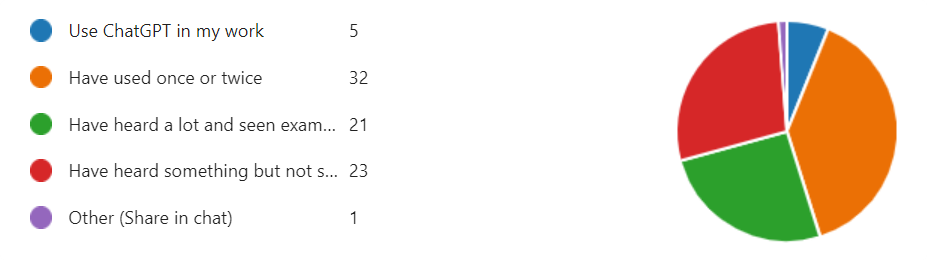
Poll: What is your experience with ChatGPT?

Comparison from a recent talk
Poll: What do you think AI might be best at?
Comparison with a recent talk
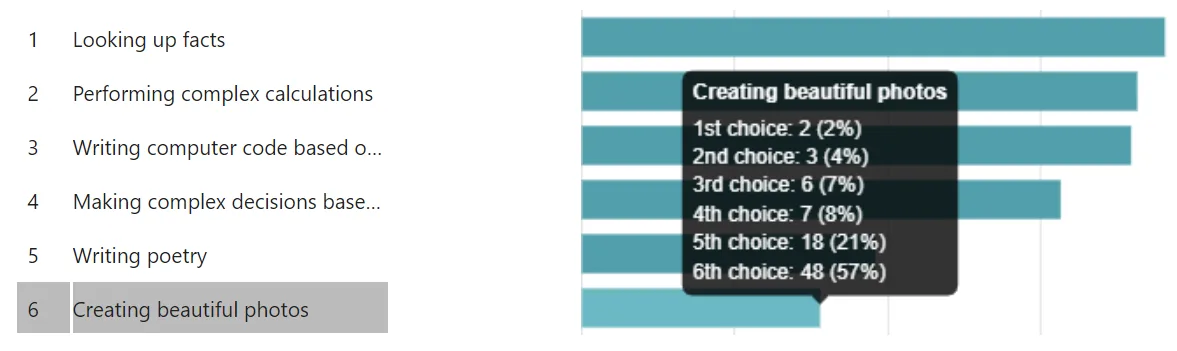
What it is actually good at?

Nobody expected AI to be any good at this
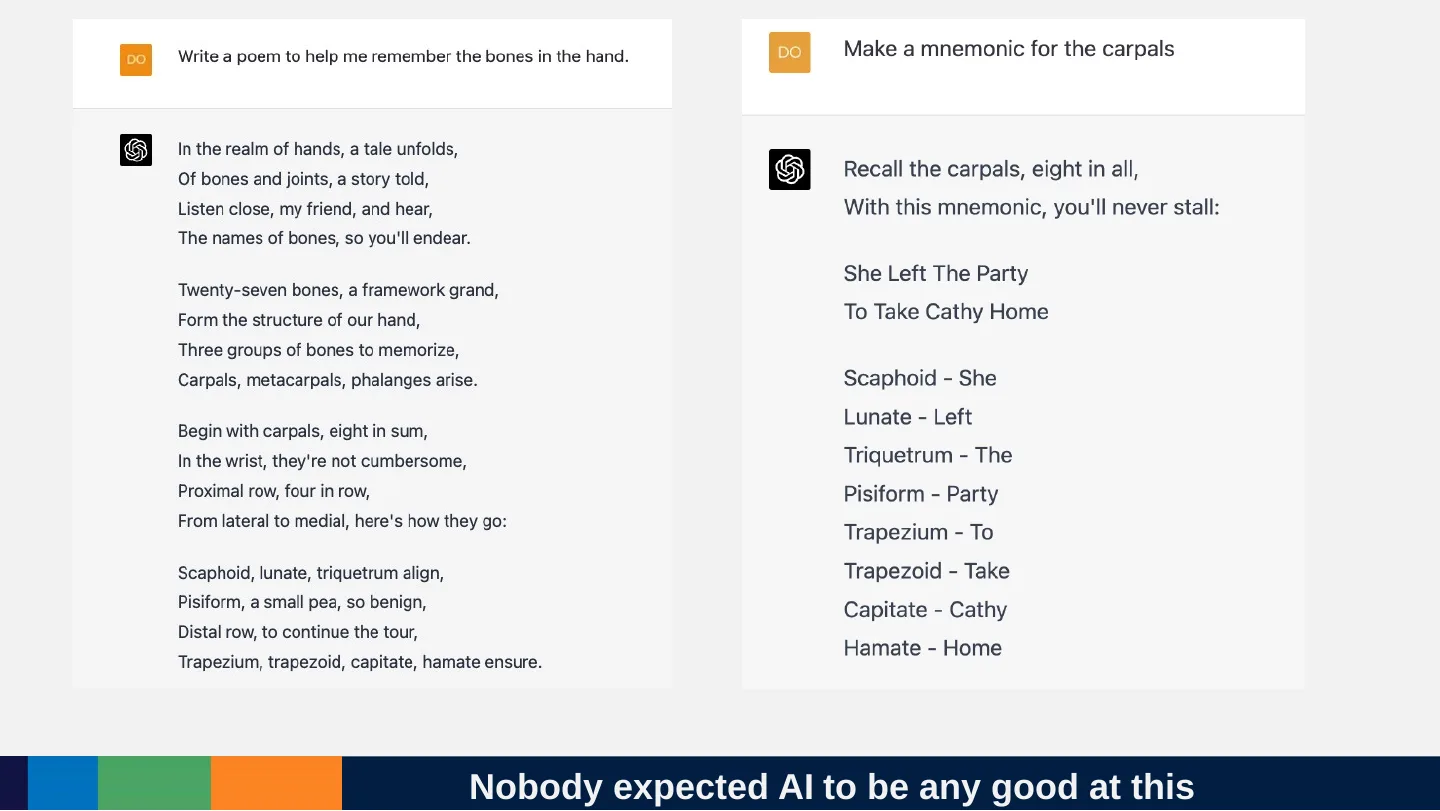
Prompt (left): Write a poem to help me remember the bones in the hand.
In the realm of hands, a tale unfolds,
Of bones and joints, a story told,
Listen close, my friend, and hear,
The names of bones, so you'll endear.
Twenty-seven bones, a framework grand,
Form the structure of our hand,
Three groups of bones to memorize,
Carpals, metacarpals, phalanges arise.
Begin with carpals, eight in sum,
In the wrist, they're not cumbersome,
Proximal row, four in row,
From lateral to medial, here's how they go:
Scaphoid, lunate, triquetrum align,
Pisiform, a small pea, so benign,
Distal row, to continue the tour,
Trapezium, trapezoid, capitate, hamate ensure.
Prompt (right): Make a mnemonic for the carpals
Recall the carpals, eight in all,
With this mnemonic, you'll never stall:
She Left The Party
To Take Cathy Home
- Scaphoid - She
- Lunate - Left
- Triquetrum - The
- Pisiform - Party
- Trapezium - To
- Trapezoid - Take
- Capitate - Cathy
- Hamate - Home
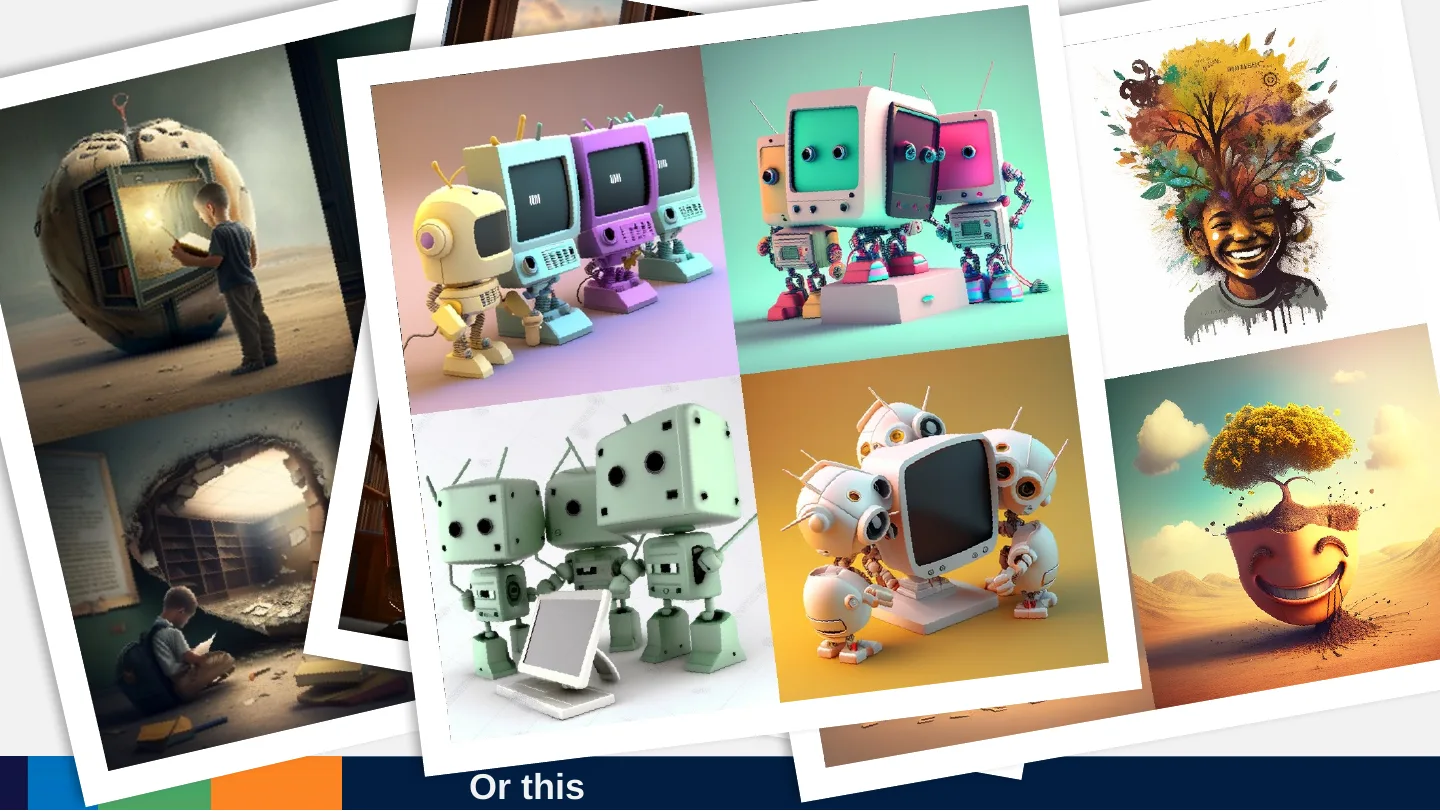
Or this
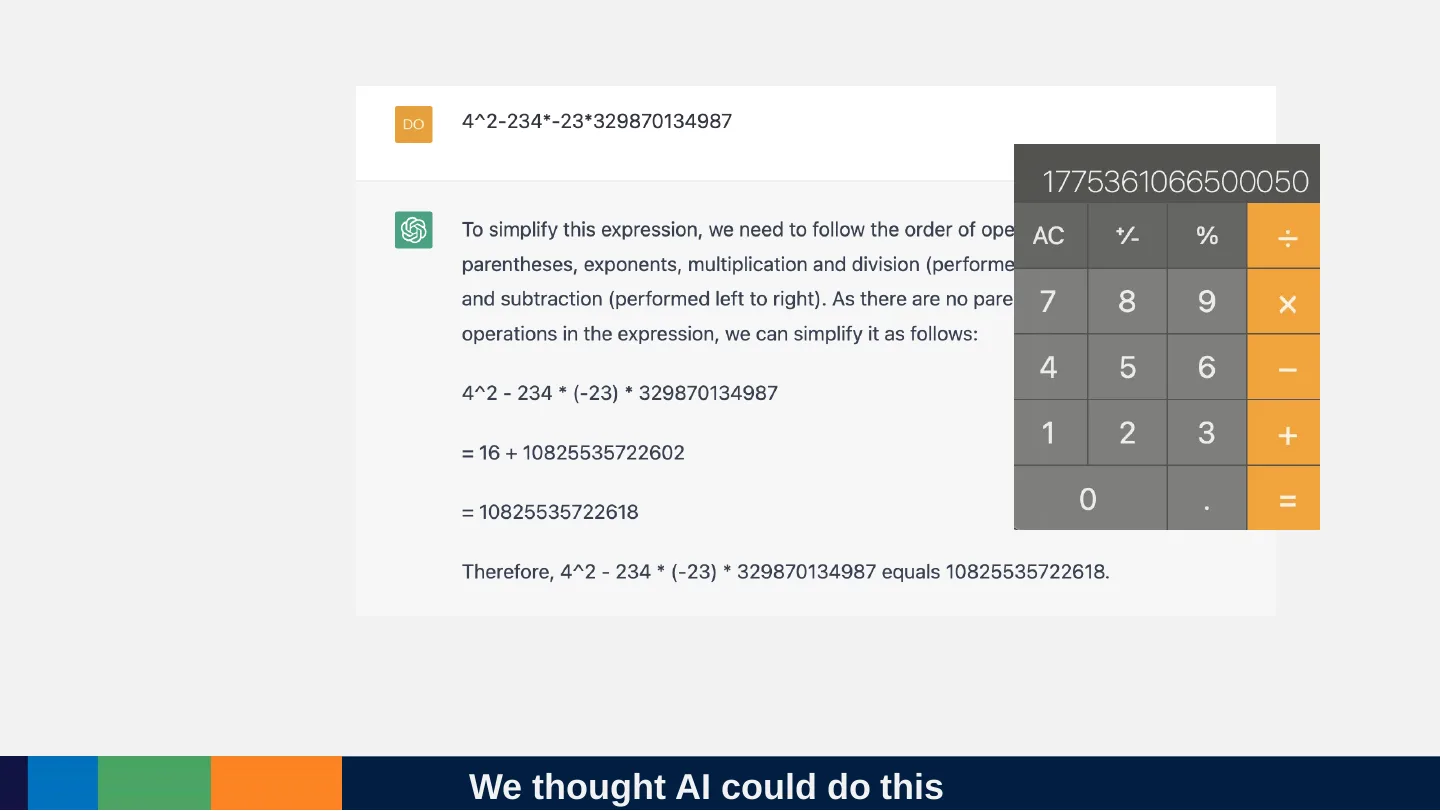
We thought AI could do this
But it is also unexpectedly good at this
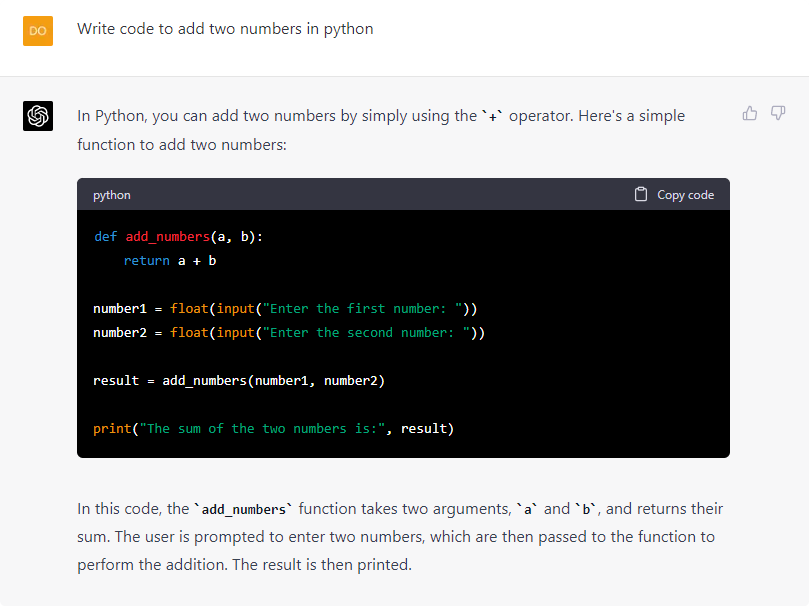
Prompt: Write code to add two numbers in python
In Python, you can add two numbers by simply using the + operator. Here's a simple function to add two numbers:
def add_numbers(a, b):
return a + b
number1 = float(input("Enter the first number: "))
number2 = float(input("Enter the second number: "))
result = add_numbers(number1, number2)
print("The sum of the two numbers is:", result)
In this code, the add_numbers function takes two arguments, a and b, and returns their sum. The user is prompted to enter two numbers, which are then passed to the function to perform the addition. The result is then printed.
How do we know what modern AI will be good or bad at?